

Abstract
Background: Professional values and ethical awareness are important components of professional identity in nutrition and dietetics education; however, existing measurement tools to assess these constructs among undergraduate students are limited. This study was conducted to develop a valid and reliable measurement tool to assess nutrition and dietetics students’ awareness of professional values, ethical attitudes, and professional responsibilities.
Methods: A total of 164 participants were included. The content validity of the scale was assessed through expert opinion, and its construct validity was evaluated using Exploratory Factor Analysis (EFA) and Confirmatory Factor Analysis (CFA). Reliability was examined using Cronbach’s alpha, McDonald’s omega, and test-retest methods.
Results: EFA results showed that the scale has a three-factor structure. All items loaded strongly onto their respective factors, and cross-loadings were low. The Cronbach’s alpha for the scale was 0.95, indicating high internal consistency. Cronbach’s alpha values for the factors were calculated as 0.91, 0.91, and 0.70, respectively; McDonald’s ω values were 0.95, 0.94, and 0.75. Test-retest reliability was r = 0.936 (p<0.001). The Kaiser–Meyer–Olkin (KMO) value was 0.874, confirming that the sample was suitable for factor analysis. The Bartlett test was significant (χ2=1654.328, p<0.001). The total variance explained is 64.8%. The CFA fit indices indicated that the model fit very well (GFI = 0.938, AGFI = 0.926, CFI = 1.000, TLI = 1.000, IFI = 1.000, RMSEA p=0.000).
Conclusion: The scale developed in this study can be used as a valid and reliable tool to assess the professional values, ethical attitudes, and levels of professional responsibility of nutrition and dietetics students. The scale has the potential to make significant contributions to both the development of educational programmes and research on professional identity and ethical awareness.
Keywords: dietitian, professional values, reliability, scale development, validity
Main Points
- A novel scale was developed to assess professional values awareness among undergraduate nutrition and dietetics students.
- The scale demonstrated excellent validity, internal consistency, and test–retest reliability, supporting its use in educational and research settings.
- The instrument evaluates key dimensions of professional values, ethical attitudes, and professional responsibility that are essential for safe and ethical clinical nutrition practice.
- The scale can help educators identify students’ strengths and areas requiring further development before clinical placements and professional practice.
- The instrument may support curriculum evaluation and the integration of ethics and professionalism training into nutrition and dietetics education.
Introduction
The term “profession” is used by specific groups to refer to a select group of highly educated, competent, and specialised individuals who serve effectively and efficiently and have earned the community’s trust.1 Professions possess a complex set of knowledge and skills that are difficult for society to understand, and within this scope, they may enjoy certain privileges, such as self-regulation and the authority to make decisions on behalf of society or individuals, all in exchange for the promise of serving society. Professions and their members, in turn, commit to providing services that are adequate, honest, and ethical, prioritising the well-being of society above all else.2 Professionalism, from a professional perspective, is defined as the institution that ensures members of the profession adhere to these commitments. In this context, every member of the profession is expected to demonstrate professionalism by acting in accordance with professional values, standards, and conduct established for the benefit of society.3 Today, it is reported that some professional organisations and their members do not sufficiently embrace these concepts, or that the privileges recognised by society are being exploited. Unfortunately, health professions are at the forefront of this group. Following the emergence of these situations, society’s representatives have responded with radical changes in the delivery of health services, and shifts in the roles of professions have occurred. Despite this, it has not yet been fully ensured that societies receive quality healthcare. Therefore, professionalism, which is also defined as a profession providing the best possible service for the benefit of society, as much as possible without regard for individual interests, remains the most essential element in ensuring that both personal and societal services provided in health care are of high quality, efficiency, and sustainability, and it cannot be ignored in any way.4,5 Therefore, many healthcare professions and the medical world still believe that professionalism is essential to providing and restoring the service they promise, and they continue to redefine the concept of professionalism, emphasise the idea of professionalism in education, encourage healthcare workers to demonstrate professionalism based on professional values, and evaluate and monitor the professional development of their members.6,7
Healthcare providers, including dietitians, a relatively young profession, agree that professional expertise is crucial, both for similar concerns and to fulfill professional obligations, best enhance the well-being of society, assume necessary responsibilities as an independent professional, and overcome potential future professional challenges.8,9 Nutrition and dietetics are critical professional fields in both clinical practice and public health improvement. Ethical and professional values in dietitians’ decision-making processes and patient management underpin service quality and patient safety. Therefore, gaining awareness of professional values during student years is crucial for the effectiveness of professional practice after graduation.10 In international literature, the development of professional values in students is generally supported by educational programmes, case studies, simulation-based learning, and field applications.11 Awareness of professional values plays a crucial role not only in ethical decision-making and patient-centred care but also in interdisciplinary collaboration, communication, and social responsibility. However, the current literature lacks standardised tools for systematically measuring professional value perceptions among nutrition and dietetics students. Existing approaches to professionalism, ethical practice, and professional responsibility provide important perspectives on professional development; however, they may not comprehensively capture professional values awareness as a multidimensional construct specific to nutrition and dietetics. In particular, professional values awareness encompasses not only ethical considerations and professional responsibilities but also professional conduct, collaboration, professional development, fairness, patient advocacy, and social responsibility. Therefore, there is a need for a profession-specific instrument that brings these interrelated dimensions together to comprehensively assess professional values awareness among nutrition and dietetics students.12 This need necessitates the development of reliable and valid scales to objectively assess students’ awareness of professional values. Such a measurement tool would facilitate the development of educational programmes, the restructuring of curricula to instill professional values, and the monitoring of students’ professional maturity.13
Although professional values, ethical attitudes, and professional responsibility are closely related in health professions education, they represent distinct but complementary aspects of professional development. Professional values refer to the principles and standards that guide appropriate professional practice, whereas ethical attitudes concern individuals’ approaches to ethical issues and ethical decision-making. Professional responsibility, in turn, refers to the fulfilment of professional duties, accountability, and obligations toward patients, colleagues, the profession, and society. In this context, professional values awareness refers to students’ recognition of and appreciation for the principles that should guide their professional practice. Thus, although professional values awareness may contribute to ethical practice and the development of professional responsibility, it should not be considered synonymous with ethical attitudes or professional responsibility.12,14 In nutrition and dietetics education, professional values encompass a broad range of professional, ethical, interpersonal, and social considerations. These include collaboration with colleagues, commitment to professional development, fairness in the provision of nutrition and dietetic services, respect for patient rights, evidence-based practice, confidentiality, advocacy, and responsibility toward society. Therefore, assessing professional values awareness requires consideration of these multiple dimensions rather than focusing solely on ethical attitudes or professional responsibility.15,16
In the present study, the scale was developed to reflect these dimensions within the specific context of nutrition and dietetics education. The resulting three-factor structure comprises Professional Values, Collaboration, and Development; Fairness and Professional Ethics; and Professional and Social Responsibility. The first dimension encompasses professional conduct, collaboration, professional development, and activities that support and promote the profession. The second addresses fairness, respect for human and patient rights, ethical and evidence-based practice, confidentiality, non-discrimination, and ethical considerations in professional services. The third encompasses patient advocacy, participation in decisions affecting the allocation of societal resources, and engagement with professional organisations. This multidimensional structure enables professional values awareness to be evaluated across the professional, ethical, collaborative, developmental, and social dimensions relevant to future dietitians. In light of this information, this study aims to develop a reliable and valid scale to assess nutrition and dietetics students’ awareness of professional values.
Materials and methods
Study design and participants
This research is a cross-sectional field study using purposive sampling. The research population comprises final-year nutrition and dietetics students in Turkey. Students enrolled in programmes other than nutrition and dietetics, those who are not final-year (4th-year) students, those who incompletely filled out the data collection form or did not complete the questionnaire, those who did not give their voluntary consent, those who had suspended their enrollment or graduated during the study period, and students who were abroad under exchange programmes (Erasmus, Farabi, etc.) during the evaluation process were excluded from this study. A pilot study was conducted with 30 participants during the scale development process, and data were subsequently collected from the determined sample for Exploratory Factor Analysis (EFA) and Confirmatory Factor Analysis (CFA). This study was conducted face-to-face with 164 nutrition and dietetics students between June and November 2025. Voluntary participation was considered in the research population. The sample size was determined to be 5–10 times the number of items in the scale to allow for validity and reliability analyses.17,18 In conclusion, the study included 164 participants. In addition to age, gender, marital status, participation in professional courses, liking for the dietetics profession, willingness to choose the same field again, academic success in courses, reasons for choosing the profession, and body mass index (BMI) information were also recorded from the participants. In the study, body weight (kg) and height (cm) were measured by self-report, and BMI was calculated as body weight divided by the square of height (kg/m2).19 Ethical approval for this study was obtained from the Ondokuz Mayıs University Social and Human Sciences Research Ethics Committee on May 30, 2025, with decision number 2025-716/5. Informed consent was obtained from all participants, and the study was conducted in accordance with the ethical principles of the Helsinki Declaration.
Scale development process
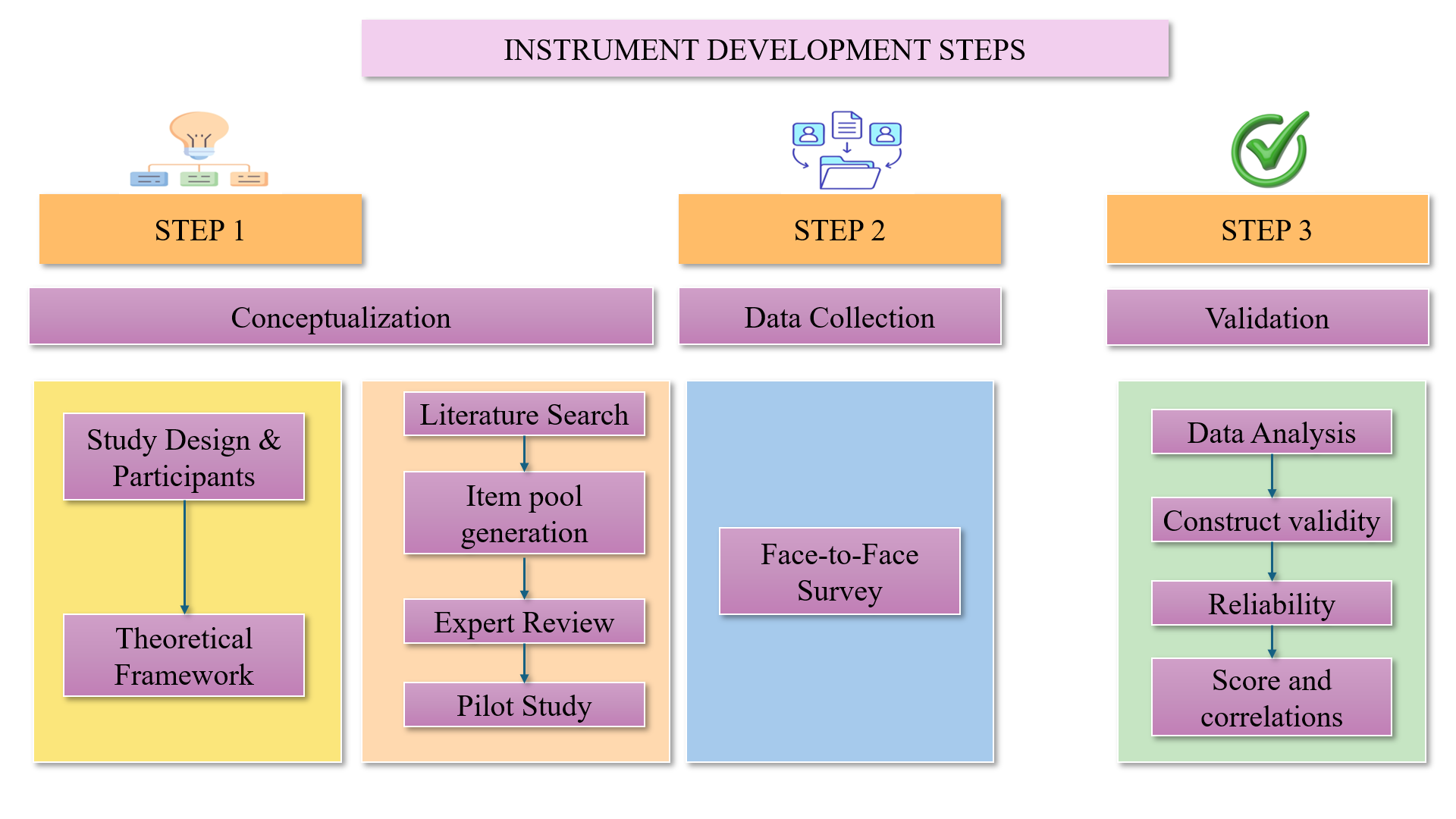
In the scale development process, a literature review was conducted to create an item pool for the “Scale of Awareness of Professional Values Among Nutrition and Dietetics Students”; previous studies and scales on the subject were examined.13,20 At this stage, existing scales were reviewed, and 32 items deemed suitable were included in the item pool. Four researchers evaluated these items, and six more items were developed and added to the item pool. For the assessment of content validity, five experts in the field of nutrition and dietetics were selected based on their academic expertise and professional experience relevant to nutrition and dietetics education and professional practice. The experts independently evaluated each item in terms of its clarity, comprehensibility, relevance to the construct of professional values awareness, and appropriateness for final-year nutrition and dietetics students. The qualitative feedback provided by the experts was reviewed by the research team, and the items were revised or removed based on the consistency of the expert evaluations and the identified problems in item wording or content. Accordingly, four items that were considered unclear or difficult to understand were revised, whereas two items containing more than one judgment were removed. Following these revisions, the research team reviewed the resulting item pool to ensure that the items adequately covered the conceptual scope of professional values awareness and were appropriate for the target population. Content validity was evaluated through expert review and qualitative assessment of the items based on the experts’ evaluations. A pilot study was conducted by administering the items to 30 participants; the 32-item version of the scale, prepared using a five-point Likert scale, was rated as “Not Important,” “Somewhat Important,” “Important,” “Very Important,” and “Extremely Important.” In this study, professional values awareness refers to students’ recognition of the importance of professional values in guiding professional practice. Therefore, the response format was designed to assess the perceived importance of each professional value, ranging from “Not Important” to “Extremely Important.” Accordingly, higher ratings indicate a greater awareness of the importance of professional values in professional practice. As a result of this preliminary study, it was determined that the scale took an average of 15–20 minutes to complete and that there were no problems in understanding the items. After the final version of the scale form was prepared, the study’s purpose was explained to the participants, and they were asked to answer the scale voluntarily. The flowchart for scale development is shown in Figure 1.
Statistical analysis
In the validity analyses, construct validity was assessed. Construct validity is a type of validity aimed at determining the extent to which a measurement instrument measures the concept or construct it intends to measure.21 Factor analysis was conducted to test construct validity. Factor analysis is a statistical method used to determine the dimensions of the items in the scale and to examine the relationships between the items and those dimensions. There are two types of factor analysis: exploratory and confirmatory. EFA aims to discover which factors the scale items cluster into; CFA aims to test the verifiability of a predetermined factor structure with the obtained data.22 EFA and CFA were conducted using independent samples. EFA was performed on the initial sample to explore the underlying factor structure, whereas CFA was subsequently conducted on an independent sample to confirm the factor structure identified through EFA. During the EFA, the cutoff point for factor loadings was set at 0.30, and items that did not measure the same construct or that loaded highly onto more than one factor (overlapping items) were removed from the analysis. Based on the analysis results, 7 items identified as overlapping (items 8, 9, 18, 28, 30, 31, and 32) were removed from the scale, and EFA was performed with 25 items.21 Principal component analysis was used to factorise the scale items; axis rotation, preferred for statements with similar characteristics, was applied to interpret the factors. Principal component analysis (PCA) was used to identify the underlying structure of the scale items and to obtain an interpretable component structure. PCA was selected as the extraction method because the primary purpose of this stage was to examine the structure of the item set and identify the components underlying the observed item responses. Varimax orthogonal rotation was used to facilitate interpretation by obtaining a clearer distribution of factor loadings across components and to maintain orthogonality among the extracted components. The basic assumptions of the EFA process were evaluated using the Kaiser–Meyer–Olkin (KMO) and Bartlett’s sphericity tests. A KMO value of ≥ 0.60 is considered acceptable, while a significance level of <0.05 is recommended for the Bartlett’s sphericity test.23 In addition, a “frequency analysis” was performed on the descriptive characteristics of the participants. Then, scale scores were obtained, and their statistics were tabulated using mean (x̄) and standard deviation (SD). The structural validity of the scale was evaluated using CFA, and its reliability (internal consistency) was assessed using the Cronbach’s α coefficient and item analysis. In the analysis of the scale data, the diagonal weighted least squares (DWLS) method was used for estimation. In scale studies, a reliability coefficient above 0.60 is interpreted as indicating that the scale has reliability. If it is between 0.61 and 0.80, it indicates acceptable moderate reliability; if it is between 0.81 and 1.00, it shows significantly high reliability. The Cronbach alpha internal consistency coefficient ranges from 0 to 1, and a coefficient approaching 1 indicates excellent reliability for the tested scale.24,25 In the analysis, χ2/df, GFI, AGFI, CFI, TLI, IFI, and RMSEA values were evaluated as goodness-of-fit indices. Excellent fit criteria were defined as χ2/df values between 0 and 3; GFI, AGFI, CFI, IFI, and TLI values ≥ 0.95; and RMSEA values ≤ 0.05. Acceptable fit criteria were defined as χ2/df values between 3 and 5; GFI, AGFI, and CFI values ≥ 0.90; IFI and TLI values between 0.90 and 0.94; and RMSEA values ≤ 0.08.26 The scale’s reliability was also assessed using a test-retest analysis. To examine test-retest reliability, the final version of the scale was administered twice to 51 final-year nutrition and dietetics students selected from the study sample, with a 15-day interval between administrations. Intraclass correlation coefficient (ICC) was calculated to assess the agreement between the two administrations. The suitability of the data collected from the sample for the desired model was analysed using SPSS version 27.0 and RStudio. The IBM SPSS Amos 25.0 software, specifically designed, was also used.27 In all statistical analyses, a significance level of p<0.05 was accepted.
Scoring procedure and interpretation
Following the item elimination process during scale development, the final version of the Professional Values Awareness Scale among nutrition and dietetics students comprises 25 items rated on a five-point Likert scale, ranging from 1 (“Not Important”) to 5 (“Extremely Important”). The final version comprises three subscales. The first subscale consists of 12 items, with possible scores ranging from 12 to 60; the second subscale consists of 10 items, with possible scores ranging from 10 to 50; and the third subscale consists of 3 items, with possible scores ranging from 3 to 15. The total scale score is calculated by summing the scores of all 25 items and ranges from 25 to 125. Both subscale scores and the total scale score can be calculated and used in statistical analyses. There are no reverse-coded items in the final version of the scale; therefore, all items are scored in the same direction. Higher scores indicate a higher level of awareness of professional values among nutrition and dietetics students. The scale has no established cut-off points or classification criteria. Therefore, the scores are interpreted as continuous scores, with higher scores reflecting greater awareness of professional values.
Results
Information about the participants is summarized in Table 1. The majority of participants were women (92.7%), while the proportion of male participants was 7.3%. A large proportion of the participants were single (98.2%). Regarding professional development and education, 84.1% had attended courses related to the profession, 87.8% liked the dietetics profession, and 64% were considering choosing the same field again. In terms of academic achievement, the majority of participants performed at a “good” level in their courses (62.2%). Regarding their reasons for choosing the profession, students most frequently cited “desire to acquire a profession” (34.2%) and “helping people” (27.4%) as motivations. The average age of the participants was 22.64 ± 3.88 years, and the average BMI was 21.85 ± 3.49 kg/m2.
| The values were presented as mean ± SD or n (%). X̄: Mean, SD: Standard Deviation, n: Number, %: Percentage, BMI:Body Mass Index. | |
| Table 1. Demographic profile of the participants. | |
| Variables |
|
| Gender | |
| Male |
|
| Female |
|
| Marital status | |
| Single |
|
| Married |
|
| Participation in profession-related courses | |
| Yes |
|
| No |
|
| Satisfaction with the Dietetics Profession | |
| Yes |
|
| No |
|
| Willingness to choose the same department again | |
| Yes |
|
| No |
|
| Academic achievement in courses | |
| Very good |
|
| Good |
|
| Moderate |
|
| Poor |
|
| Factors influencing profession choice | |
| Influence of family members and peers |
|
| Desire to pursue the profession |
|
| Motivation for professional and career development |
|
| Perception of having made an incorrect career choice |
|
| Desire to help others |
|
| Age (years) | |
| X̄ ± SD |
|
| Min-Max |
|
| BMI | |
| X̄ ± SD |
|
| Min-Max |
|
Table 2 presents the results of the exploratory factor analysis of the scale. The study confirmed the scale’s three-factor structure. Factor I, “Professional Values, Collaboration and Development,” comprises 12 items with loadings ranging from 0.587 to 0.816, encompassing the dimensions of professional values reflected in behavior, professional development, and collaboration. Factor II, “Fairness and Professional Ethics,” comprises 10 items with loadings ranging from 0.571 to 0.805 and measures ethical practices, patient rights, and fair professional conduct. Factor III, “Professional and Social Responsibility,” comprises three items with loadings ranging from 0.641 to 0.793, reflecting professional and social responsibility. All items loaded strongly onto their respective factors, cross-loadings were low, and the factors represent the scale independently and robustly.
| Table 2. Results of the EFA scale on nutrition and dietetics students’ awareness of professional values. | |||||
| Factor loadings of the items | Item factor loadings after varimax rotation | Items |
|
||
|
|
|
|
|||
| Factor I: Professional Values, Collaboration, and Development | |||||
| Q2 | Q1 | Considering professional values as a control mechanism when performing any behavior |
|
||
| Q3 | Q2 | Adopting professional value–oriented behaviors as a way of life |
|
||
| Q7 | Q3 | Engaging in nutrition-related activities to promote the profession |
|
||
| Q20 | Q4 | Volunteering to offer nutrition services to underserved populations |
|
||
| Q4 | Q5 | Conducting self-assessment of professional value–oriented behaviors |
|
||
| Q5 | Q6 | Applying and sustaining new scientific standards in learning settings |
|
||
| Q19 | Q7 | Offering services to financially disadvantaged patients free of charge |
|
||
| Q1 | Q8 | Reflecting professional values in behavior |
|
||
| Q21 | Q9 | Guiding and safeguarding public health |
|
||
| Q23 | Q10 | Recognizing the role of professional nutrition and dietetics organizations in shaping health policies |
|
||
| Q10 | Q11 | Supporting and defending colleagues when they are subjected to professional insults or harsh criticism |
|
||
| Q6 | Q12 | Organizing profession-specific activities to create and develop professional practice environments |
|
||
| Factor II Fairness and Professional Ethics | |||||
| Q16 | Q13 | Practicing the profession guided by respect for human and patient rights |
|
||
| Q15 | Q14 | Providing unbiased counseling to patients with diverse lifestyles |
|
||
| Q13 | Q15 | Providing fair access to nutrition and dietetic services |
|
||
| Q12 | Q16 | Consulting field experts when the patient’s macro- and micronutrient needs cannot be sufficiently addressed |
|
||
| Q25 | Q17 | Protecting patients’ personal, ethical, and legal rights and maintaining confidentiality |
|
||
| Q29 | Q18 | Adhering to contemporary, evidence-based professional standards for professional development |
|
||
| Q17 | Q19 | Avoiding discrimination against patients based on their gender or sexual orientation |
|
||
| Q11 | Q20 | Providing support to new colleagues during the workplace orientation process |
|
||
| Q14 | Q21 | Taking responsibility for meeting the health needs of culturally diverse populations |
|
||
| Q26 | Q22 | Refusing to provide consultation in the event of an ethical situation that conflicts with professional values |
|
||
| Factor III Professional and Social Responsibility | |||||
| Q27 | Q23 | Acting as an advocate on behalf of the patient |
|
||
| Q22 | Q24 | Participating in policy decisions that influence the allocation of societal resources |
|
||
| Q24 | Q25 | Maintaining membership in professional associations and other relevant organizations |
|
||
The reliability analysis of the scale is shown in Table 3. The scale showed high internal consistency at the factor level. Factor I (Professional Values, Collaboration and Development) showed corrected item-total correlations ranging from 0.62 to 0.78 across 12 items, with a Cronbach’s alpha of α = 0.91 and McDonald’s ω = 0.95. Factor II (Fairness and Professional Ethics) showed corrected item-total correlations ranging from 0.51 to 0.84 across 10 items, with a Cronbach’s alpha of α = 0.91 and McDonald’s ω = 0.94. Factor III (Professional and Social Responsibility) showed corrected item-total correlations ranging from 0.56 to 0.68 across 3 items, with a Cronbach’s alpha of α = 0.70 and McDonald’s ω = 0.75. The overall Cronbach’s alpha of 0.95 indicated high internal consistency of the scale. In the test–retest analysis, the correlation between the two administrations was r = 0.936 (p<0.001). The test–retest reliability of the scale was excellent, with a single-measure intraclass correlation coefficient of 0.934 (ICC, p<0.001), indicating a high level of agreement between the two administrations.
| The information was displayed as mean ± standard deviation, X̄: Mean, SD: Standard Deviation. | |||||
| Table 3. The reliability analysis of the scale. | |||||
| Variable |
|
|
|
|
|
| Factor I |
|
|
|
||
| Q1 |
|
|
|||
| Q2 |
|
|
|||
| Q3 |
|
|
|||
| Q4 |
|
|
|||
| Q5 |
|
|
|||
| Q6 |
|
|
|||
| Q7 |
|
|
|||
| Q8 |
|
|
|||
| Q9 |
|
|
|||
| Q10 |
|
|
|||
| Q11 |
|
|
|||
| Q12 |
|
|
|||
| Factor II |
|
|
|
||
| Q13 |
|
|
|||
| Q14 |
|
|
|||
| Q15 |
|
|
|||
| Q16 |
|
|
|||
| Q17 |
|
|
|||
| Q18 |
|
|
|||
| Q19 |
|
|
|||
| Q20 |
|
|
|||
| Q21 |
|
|
|||
| Q22 |
|
|
|||
| Factor III |
|
|
|
||
| Q23 |
|
|
|||
| Q24 |
|
|
|||
| Q25 |
|
|
|||
| Scale Cronbach’s alpha |
|
||||
| Test–Retest Reliability Coefficients | |||||
| r |
|
||||
| p |
|
||||
| (ICC = 0.934, p<0.001) | |||||
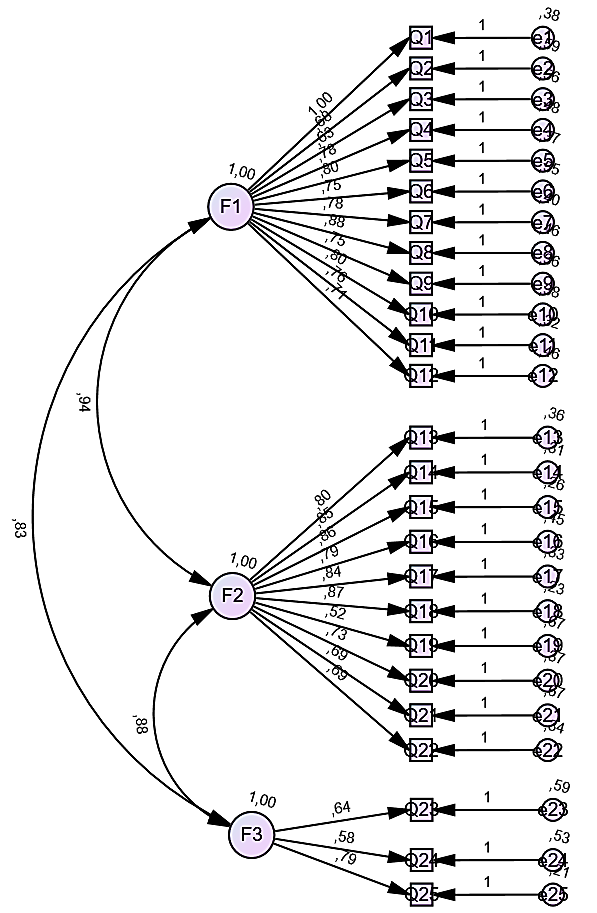
The results presented in Table 4 provide information on both the scale’s structural validity and sample adequacy. The KMO value is 0.874, indicating high sample adequacy. The Bartlett’s test of sphericity was statistically significant (χ2 = 1654.328, p < 0.001), confirming the presence of correlations suitable for factor analysis among the variables. With 64.8% of the variance explained, the scale items explain a significant portion of the total variance. The CFA results show that the three-factor structure of the scale fits the data well. When the fit indices are examined, high values such as GFI = 0.938, AGFI = 0.926, CFI = 1.000, TLI = 1.000, and IFI = 1.000 indicate very good model fit. The RMSEA 0.000 indicates a very low mean squared error and a strong fit between the model and the data.
| �2 – Chi-square; df – Degrees of freedom; GFI – Goodness of Fit Index; AGFI – Adjusted Goodness of Fit Index; CFI – Comparative Fit Index; TLI – Tucker–Lewis Index; IFI – Incremental Fit Index; RMSEA – Root Mean Square Error of Approximation; KMO – Kaiser–Meyer–Olkin; EFA – Exploratory Factor Analysis; CFA – Confirmatory Factor Analysis. Statistically significant results are indicated in bold (p<0.05). | ||||||||
| Table 4. EFA results and fit indices for CFA of the scale. | ||||||||
| Item |
|
|
|
|
||||
| Scale |
|
|
|
|
||||
| CFA fit indices |
|
|
|
|
|
|
|
|
| Scale |
|
|
|
|
|
|
|
|
The CFA graph for the scale is shown in Figure 2. The model’s findings showed that the three-factor structure was consistent with the data and that the items adequately predicted the relevant factors.
Discussion
In a professional context, professionalism is defined as the ability to adopt the values of a profession and integrate them into one’s practice.2 This scale development study aimed to determine the extent to which exemplary behaviors expected of a dietitian within the framework of professional values are exhibited, individuals’ awareness of professional values, the degree to which undergraduate education contributes to this awareness, and the factors influencing the development and application of professional values.
In this study, the scale development process was completed by defining the structure by field experts, creating an item pool, selecting an appropriate scoring/response system (5-point Likert), simplifying the scale by performing item analyses, evaluating the responses from the pilot application and revising the items, and finally assess the validity and reliability of all items in the scale individually and as a whole by applying a pre-test, and finally using a post-test.28,29 The factor structure identified in the analysis supports the multidimensional nature of the scale developed among nutrition and dietetics students. This approach is consistent with established recommendations for assessing the suitability of data for factor analysis.21 The fit indices from the confirmatory factor analysis, which fall within ideal limits, suggest that the scale’s model structure meets theoretical expectations. This indicates that the developed scale has achieved structural validity.30 Furthermore, a strong correlation was found between measurements taken at two different times, indicating that the scale did not change. This scale, developed both in terms of factors and overall, is a reliable measurement tool with high internal consistency and test-retest reliability. Overall, the EFA and CFA results indicate that the scale has high construct validity and that the three-factor model provides a reliable fit to the data.
While studies on developing scales to measure various constructs in the field of dietetics exist in the literature, many lack comprehensive measurement tools that focus on a holistic assessment of professional values, ethics, and responsibility. For example, the Dietetics Profession Privilege Scale reported a six-dimensional structure designed to determine levels of privilege among members of the profession and to improve professional inclusivity.31 This scale constitutes an essential example of validation of its multidimensional structure and strong psychometric properties. However, this scale focuses more on assessing structural inequalities, access to resources, and professional privilege.Similarly, a study conducted in Turkey reported a 27-item, six-subdimensional structure called the Ethical Attitude Scale for Dietitians, designed to measure dietitians’ ethical attitudes.13 This scale underwent rigorous content and construct validity testing, demonstrating high internal consistency (Cronbach’s Alpha = 0.827) and serving as a reliable measure of professional ethics and behaviors. However, this scale primarily assesses dietitians’ adherence to ethical principles. Compared with previous dietetics-related instruments, the three-factor structure identified in the present study encompasses a broader range of professional domains. While the Dietetics Profession Privilege Scale primarily focuses on professional privilege and structural inequalities32, and the Ethical Attitude Scale for Dietitians emphasizes ethical attitudes and professional conduct33, the present scale additionally incorporates professional collaboration, professional development, and social responsibility. This distinction suggests that professional values awareness may extend beyond ethical attitudes to include the development of professional identity, collaborative practice, and responsibility toward society. In addition to instruments developed specifically in the field of dietetics, professional values and related constructs have also been examined through multidimensional scales in other health professions. For example, the Nurses’ Professional Values Scale and its revised versions have been used to assess professional values in nursing, with studies reporting multidimensional factor structures encompassing domains such as caring, professionalism, activism, justice, and trust.32 Similarly, a Turkish adaptation study of the Nurses Professional Values Scale demonstrated that professional values can be evaluated as a multidimensional construct in nursing.33 In physical therapy, the Professionalism in Physical Therapy Core Values Self-Assessment Tool was developed to increase awareness of personal professional values and has been used to evaluate the development of professionalism among physical therapy students.34 In medical education, the Turkish Professionalism Assessment Scale identified professional relationship and development and responsibility as important dimensions of professionalism, which conceptually overlap with the professional development, collaboration, and responsibility aspects of the present scale.35 Compared with existing scales in the literature, the present scale incorporates several dimensions related to professional values, professional development, ethical practice, and social responsibility within a single framework. These findings indicate that professional values are generally conceptualized as a multidimensional construct across health professions. However, the specific dimensions and factor structures may vary according to the professional context and the theoretical framework underlying each instrument. The factor structure of the present scale can be interpreted in relation to the conceptualization of professional values in previous studies. The first factor brings together professional values, collaboration, and professional development, suggesting that professional values awareness may involve both commitment to professional standards and active engagement in professional growth and collaborative practice. The second factor emphasizes fairness and professional ethics, highlighting the role of ethical principles and equitable decision-making in professional practice. The third factor reflects professional and social responsibility, extending the concept of professional values beyond individual professional conduct toward responsibilities to public health and society. Further the relatively lower reliability coefficient observed for Factor III compared with the other factors may be explained by several considerations. First, Factor III contains fewer items, and the number of items can influence internal consistency coefficients, with shorter subscales generally tending to yield lower reliability estimates. Second, the items within this factor address different but conceptually related aspects of professional and social responsibility, including contributions to public health, social responsibility, and fulfillment of professional roles. This broader content may result in greater variability in responses across items. Therefore, the relatively lower reliability coefficient may reflect both the smaller number of items and the broader content coverage of this factor. Nevertheless, the findings should be interpreted in conjunction with the overall psychometric evidence and the conceptual coherence of the factor. Taken together, these dimensions indicate that professional values awareness encompasses ethical, developmental, collaborative, and socially oriented aspects of professional practice.
This study provides important evidence regarding the development and psychometric evaluation of a professional values awareness scale specifically designed for nutrition and dietetics students. Despite the methodological strengths of the study and the evidence obtained regarding the psychometric properties of the scale, some limitations should be considered when interpreting the findings. The use of purposive sampling and the inclusion of final-year nutrition and dietetics students may limit the generalizability of the findings to students from different academic years. While the sample size was sufficient for the analyses performed, studies involving larger samples are needed to further validate the factor structure and enhance the generalizability of the findings. Although the current study provides evidence supporting the validity and reliability of the scale, re-evaluating its factor structure and psychometric properties in different universities, across different educational levels, and in more diverse samples would provide stronger evidence for its applicability across different contexts.
In this study, the findings from the exploratory and confirmatory factor analyses provide evidence supporting the construct validity of the scale. Furthermore, the internal consistency findings provide evidence of adequate reliability. Overall, the findings provide preliminary support for the validity and reliability of the developed scale for assessing professional values awareness among nutrition and dietetics students. The scale may contribute to future research on professional identity development and the evaluation of educational programs related to professional values and ethical responsibilities. Further studies involving larger and more diverse samples are warranted to confirm its psychometric properties and applicability across different educational contexts.
Ethics committee approval
The study was approved by the ethics committee. Name of the Committee: Ondokuz Mayıs University Social and Human Sciences Research Ethics Committee; Date: May 30, 2025; Decision / Protocol Number: 2025-716/5.
Informed consent
Written informed consent was obtained from the patient(s) or their legal guardians for the publication of this study and any accompanying images.
Conflict of interest
The authors declare that there is no conflict of interest to disclose.
Funding
The authors declare that the study received no funding.
Data availability statement
The data that support the findings of this study are available from the corresponding author upon reasonable request.
Declaration of generative AI and AI-assisted technologies
The authors declare that no generative AI or AI-assisted technologies were used in the writing or preparation of this manuscript.
References
- Asghari F. Organizational professionalism: role of medical council in public trust in the profession. J Adv Med Educ Prof. 2025;13(4):353–358. https://doi.org/10.30476/jamp.2025.105902.2133
- Sadeq A, Guraya SS, Fahey B, et al. Medical professionalism education: a systematic review of interventions, outcomes, and sustainability. Front Med. 2025;12:1522411. https://doi.org/10.3389/fmed.2025.1522411
- Savage Hoggard CL, Kaufman A, Michener JL, Phillips RL. Academic medicine’s fourth mission: building on community-oriented primary care to achieve community-engaged health care. Acad Med. 2023;98(2):175–179. https://doi.org/10.1097/ACM.0000000000004991
- Adıgüzel O, Tanrıverdi H, Özkan DS. Mesleki profesyonellik ve bir meslek mensupları olarak hemşireler örneği. Yönetim Bilimleri Dergisi. 2011;9(2):235–260.
- Herdman EA. Meslekler ve profesyonellik. Hemşirelikte Eğitim ve Araştırma. 2012;9(2):3–7.
- Sullivan AM, Hsiao L, Schwartzstein RM, et al. Re-defining professionalism in medicine in an era of rapid change: a modified Delphi study. Front Med (Lausanne). 2026;12:1686745. https://doi.org/10.3389/fmed.2025.1686745
- Cruess SR, Cruess RL, Steinert Y. Linking the teaching of professionalism to the social contract: a call for cultural humility. Med Teach. 2010;32(5):357–359. https://doi.org/10.3109/01421591003692722
- Cleary A, Thompson C, Villani A, Swanepoel L. Preprofessional identity of nutrition and dietetics students in Australia. J Nutr Educ Behav. 2024;56(11):783–793. https://doi.org/10.1016/j.jneb.2024.06.013
- MacLellan D, Lordly D, Gingras J. Professional socialization in dietetics: a review of the literature. Can J Diet Pract Res. 2011;72(1):37–42. https://doi.org/10.3148/72.1.2011.37
- Ergül Y, Arslan S, Dal N, Şahin K. “ Aware or not”: determining the professional awareness rates of nutrition and dietetics students and identifying the affecting factors. Bingöl Üniversitesi Sağlık Dergisi. 2024;5(2):271–283. https://doi.org/10.58605/bingolsaglik.1457000
- Rosa M, Giroux I. Dietetic students’ perceptions of learning professional competencies with four simulations throughout a semester. Can J Diet Pract Res. 2022;83(3):139–143. https://doi.org/10.3148/cjdpr-2022-006
- Academy Quality Management Committee. Academy of nutrition and dietetics: revised 2017 standards of practice in nutrition care and standards of professional performance for registered dietitian nutritionists. J Acad Nutr Diet. 2018;118(1):132–140.e15. https://doi.org/10.1016/j.jand.2017.10.003
- Özdilek MR, Önal Ö, İnce F. Reliability and validity of ethical attitude scale in dietitians: methodological study. Turkiye Klinikleri Journal of Medical Ethics-Law & History. 2024;32(1):1–10. https://doi.org/10.5336/mdethic.2023-97073
- Zheng L, Cheng Y, Ge G, et al. Professional ethics in dietetics: a global document analysis of codes of ethics and conduct. J Hum Nutr Diet. 2026;39(3):e70268. https://doi.org/10.1111/jhn.70268
- Cárdenas D, Davisson Correia MIT, Hardy G, et al. Nutritional care is a human right: translating principles to clinical practice. Nutr Clin Pract. 2022;37(4):743–751. https://doi.org/10.1002/ncp.10864
- Peregrin T. Revisions to the code of ethics for the nutrition and dietetics profession. J Acad Nutr Diet. 2018;118(9):1764–1767. https://doi.org/10.1016/j.jand.2018.05.028
- Boateng GO, Neilands TB, Frongillo EA, Melgar-Quiñonez HR, Young SL. Best practices for developing and validating scales for health, social, and behavioral research: a primer. Front Public Health. 2018;6:149. https://doi.org/10.3389/fpubh.2018.00149
- Carpenter S. Ten steps in scale development and reporting: A guide for researchers. Communication methods and measures 2018;12(1):25–44. https://doi.org/10.1080/19312458.2017.1396583
- World Health Organization. Body mass index. 2019. Available at: https://www.who.int/data/gho/data/themes/topics/topic-details/GHO/body-mass-index (Accessed on August 16, 2026).
- Acaroğlu R. Revize Edilen Hemşirelerin Mesleki Değerleri Ölçeği Türkçe formunun güvenirlik ve geçerliği. Florence Nightingale Hemşirelik Dergisi. 2014;22(1):8–16. https://doi.org/10.17672/fnhd.88515
- Büyüköztürk Ş. Sosyal bilimler için veri analizi el kitabı. İstatistik, araştırma deseni SPSS uygulamaları ve yorum. 24th ed. Pegem Akademi Yayıncılık; 2018.
- Tabachnick BG, Fidell LS. Using multivariate statistics. 5th ed. Allyn and Bacon; 2007.
- Streiner DL, Norman GR, Cairney J. Health measurement scales: a practical guide to their development and use. 6th ed. Oxford University Press; 2024.
- Kline RB, Little TD. Principles and practice of structural equation modeling. Guilford Publications; 2023.
- West SG, Taylor AB, Wu W. Model fit and model selection in structural equation modeling. In: Hoyle RH, editor. Handbook of Structural Equation Modeling. New York: The Guilford Press; 2012: 209–231.
- Polat H, Karakose T, Ozdemir TY, Tülübaş T, Yirci R, Demirkol M. An Examination of the relationships between psychological resilience, organizational ostracism, and burnout in K-12 teachers through structural equation modelling. Behav Sci (Basel). 2023;13(2):164. https://doi.org/10.3390/bs13020164
- R Core Team. RA language and environment for statistical computing, R Foundation for Statistical Computing. 2020.
- Trakman GL, Forsyth A, Hoye R, Belski R. Developing and validating a nutrition knowledge questionnaire: key methods and considerations. Public Health Nutr. 2017;20(15):2670–2679. https://doi.org/10.1017/S1368980017001471
- Zamanzadeh V, Ghahramanian A, Rassouli M, Abbaszadeh A, Alavi-Majd H, Nikanfar AR. Design and implementation content validity study: development of an instrument for measuring patient-centered communication. J Caring Sci. 2015;4(2):165–178. https://doi.org/10.15171/jcs.2015.017
- Schermelleh-Engel K, Moosbrugger H, Müller H. Evaluating the fit of structural equation models: Tests of significance and descriptive goodness-of-fit measures. Psychol Methods 2003;8(2):23–74. https://doi.org/10.23668/psycharchives.12784
- Burt KG, Fuster M, Folta S, et al. The Dietetics Profession Privilege Scale: development, psychometric testing, and application among a diverse cohort of dietetics professionals. J Acad Nutr Diet. 2025;125(3):366–385. https://doi.org/10.1016/j.jand.2024.09.005
- Weis D, Schank MJ. Development and psychometric evaluation of the Nurses Professional Values Scale--Revised. J Nurs Meas. 2009;17(3):221–231. https://doi.org/10.1891/1061-3749.17.3.221
- Turan GB, Yıldız GN, Çiftçi B. Adaptation of nurses’ professional values scale into Turkish. BMC Nurs. 2025;24(1):316. https://doi.org/10.1186/s12912-025-02904-5
- Furgal KE, Norris ES, Young SN, Wallmann HW. Relative and absolute reliability of the professionalism in physical therapy core values self-assessment tool. J Allied Health 2018;47(1): e45-e48.
- Tanrıverdi EÇ, Nas MA, Kaşali K, Layık ME, Abd El-Aty AM. Validity and reliability of the Professionalism Assessment Scale in Turkish medical students. PLoS One. 2023;18(1):e0281000. https://doi.org/10.1371/journal.pone.0281000
Copyright and License
Copyright © 2026 The Author(s). This is an open access article distributed under the Creative Commons Attribution License (CC BY), which permits unrestricted use, distribution, and reproduction in any medium or format, provided the original work is properly cited.